
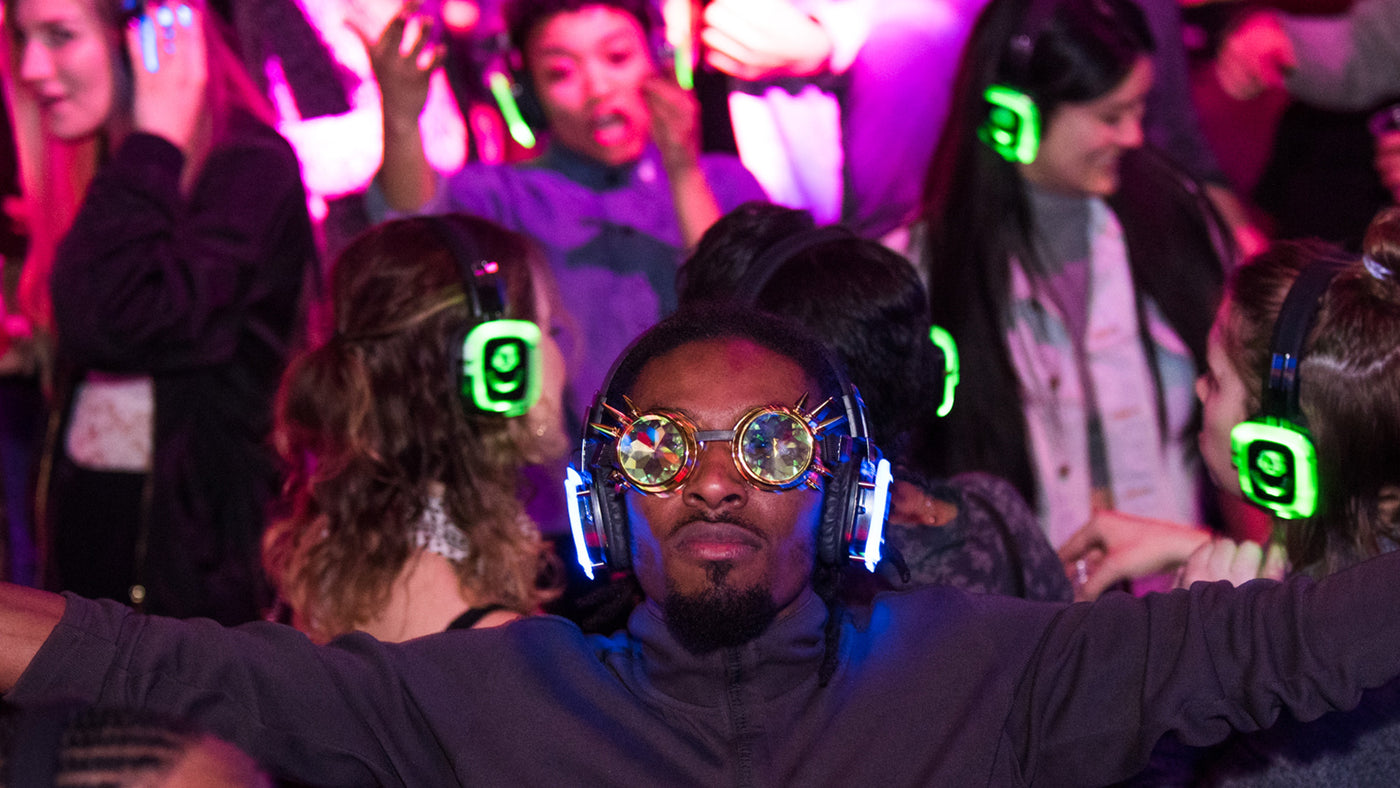

For many events, sound restrictions are not a minor detail—they shape the entire production plan.
Why Noise Ordinances Matter More Than Ever
Noise ordinances exist because amplified sound affects more than just the people attending an event. It can spill into neighborhoods, interrupt sleep, interfere with conversation, and generate complaints that create operational risk for organizers. The federal framing is broad: the EPA says inadequately controlled noise presents a danger to the public’s health and welfare, especially in urban areas.
For organizers, that means audio strategy is not only a creative decision. It is a compliance decision. If your event depends on speakers, every permit conversation becomes more complicated. If your event can reduce or eliminate external amplification, you start from a much stronger position.

The exact limits vary by city, which makes proactive planning essential.
Noise Rules Are Local, Specific, and Often Strict
One of the most important things to understand about noise ordinances is that they are highly local. There is no single national event sound rulebook. Cities, agencies, and venue authorities often set their own limits, permitting processes, and cutoff times. In Nashville, for example, the city’s special event permit requirements say events with amplified sound must end amplification by or before 11 p.m.
New York City also places formal controls on sound. Its permit materials note that sound permits are handled through police precincts in relevant cases, and NYC event guidance states that sound ordinances prohibit certain sound use during specified nighttime hours.
Because rules vary, organizers need a format that can adapt across jurisdictions. That is where silent audio becomes especially useful.

Once speakers affect the surrounding area, every nearby listener becomes part of the event whether they chose to be or not.
Amplified Sound Creates Friction Fast
Traditional sound systems are designed to project. That works well in enclosed venues built for amplification, but it creates friction in parks, rooftops, campuses, street activations, and mixed-use public spaces. Even when the event itself is well produced, the sound can become the problem.
That problem is not theoretical. The existence of city permit rules, noise codes, enforcement channels, and sound-device applications makes clear that amplified sound is treated as a real public issue, not just an event preference.
For brands and planners, that means the old model of “just turn it up” is often the least efficient option.

Instead of broadcasting outward, silent audio delivers sound directly to attendees.
How Silent Disco Headphones Solve the Core Problem
Silent disco technology works because it changes the path sound takes. Instead of pushing music, commentary, or instruction into the air, it routes audio directly into wireless headphones. Quiet Events describes this as delivering crystal-clear sound to attendees while eliminating external noise interference, especially in outdoor planning and public event settings.
That makes silent disco a strong solution for events affected by noise ordinances. The event can still feel lively and immersive for participants, but the surrounding environment does not experience the same level of disruption.

Reducing external sound does not make events less engaging—it often makes them clearer and more flexible.
Better Compliance Can Also Mean Better Guest Experience
A common misconception is that quieter events feel weaker. In practice, silent audio often improves the attendee experience. Quiet Events highlights direct sound delivery, reduced outside interference, over-ear headphones that cut down on ambient noise, professional sound quality, and multi-channel listening with visible LED channel indicators.
For attendees, that means clearer listening. For organizers, it means fewer compromises between experience quality and compliance. Instead of lowering the event’s energy to satisfy sound rules, planners can redesign the audio path entirely.

Parks, plazas, campuses, and open-air venues benefit from sound control and audience flexibility.
Public Spaces Are a Natural Fit for Silent Audio
Quiet Events explicitly markets silent disco headphones for public spaces, emphasizing their value in outdoor event planning, community programming, and public venue coordination. The company highlights simple setup, sanitized and charged headphones, long battery life, strong range, branding options, and integration into public event logistics.
This matters because public spaces are exactly where sound conflicts tend to surface. A format that works well without filling the entire area with amplified audio is often much easier to defend operationally and politically.

Fitness classes, movies, tours, conferences, and brand activations can all run into sound restrictions.
Noise Ordinances Affect More Than Concerts
Noise restrictions are often associated with concerts and parties, but the issue is much broader. Quiet Events’ use-case pages position silent headphone systems for many categories beyond dance floors, including guided tours, movies, theater, learning labs, sporting events, public spaces, and experiential activations.
That versatility is important for SEO and for actual planning. The same problem—shared space sound conflict—shows up across many event types. Silent audio offers one of the few solutions that scales across them.

When the sound is personal, one space can support more than one audience experience.
Multi-Channel Audio Helps Events Stay Flexible
Quiet Events’ public-space materials note support for 3, 10, and 45 channels, with individual transmitters per channel and range extending over 1,500 feet from the base. That means an event can offer multiple DJs, different languages, alternate content streams, or separate programming zones without blasting all of that into the surrounding neighborhood.
This is one reason silent audio is especially appealing for compliance-heavy environments. It reduces external disruption while increasing internal flexibility.

Experience, range, channel options, and public-space positioning matter when compliance is part of the brief.
Why Quiet Events Is a Strong Brand for Noise-Sensitive Events
Quiet Events’ own site positions the brand across public spaces, noise-ordinance use cases, and other shared-space event categories. It lists offices in multiple U.S. and international markets, and its public-space messaging emphasizes high-quality equipment, seamless operations, and event adaptability.
For a planner searching for a noise ordinance event solution, that combination is important. The vendor is not just providing headphones. It is providing a format designed for places where open-air sound can create constraints.
Frequently Asked Questions
What are noise ordinances for events?
What are noise ordinances for events?
Noise ordinances for events are local rules or permit conditions that restrict how and when amplified sound can be used. They often vary by city, venue type, and event format. For example, Nashville requires amplified sound at permitted special events to end by or before 11 p.m.
Why do noise ordinances matter for event planners?
Why do noise ordinances matter for event planners?
They affect event timing, sound design, permits, neighbor relations, and complaint risk. The EPA says inadequately controlled noise can threaten health and welfare and is linked to issues such as speech interference, hearing loss, sleep disruption, and lost productivity.
How can silent disco headphones help with noise ordinances?
How can silent disco headphones help with noise ordinances?
Silent disco headphones reduce the amount of amplified sound released into the surrounding area by sending audio directly to attendees. Quiet Events specifically positions silent audio as useful for outdoor planning and public event organization where sound quality and noise control both matter.
Are silent disco events legal everywhere?
Are silent disco events legal everywhere?
No single answer covers every city. Rules depend on local ordinances, permit conditions, venue policies, and event type. Silent audio can make compliance easier, but organizers still need to check local requirements.
What kinds of events benefit from a noise ordinance-friendly format?
What kinds of events benefit from a noise ordinance-friendly format?
Outdoor dance events, fitness classes, guided tours, movie nights, campus programming, seminars, activations, and public-space events can all benefit. Quiet Events markets headphone-based solutions across many of these use cases.
Why choose Quiet Events for noise-sensitive public events?
Why choose Quiet Events for noise-sensitive public events?
Quiet Events markets silent headphone systems specifically for public spaces and noise-sensitive uses, highlighting multi-channel options, more than 1,500 feet of range, long battery life, over-ear design, and branded operational support.
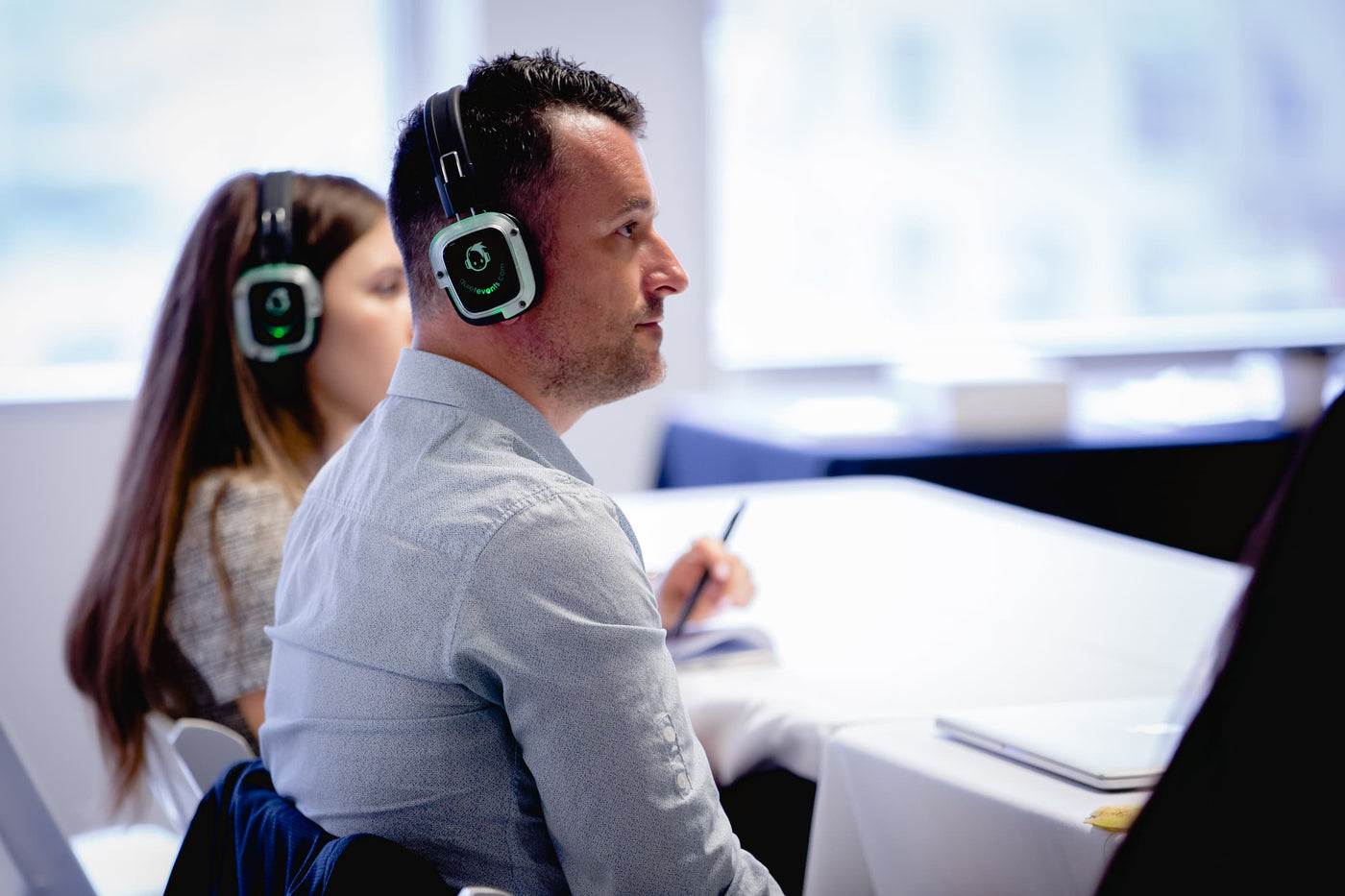
-

12 Hours
Battery Life (fully charged)
-

3,10 & 45 Channels
Of Audio w/ LED Lights
-

Individual Transmitters
Per Channel that can be Placed Anywhere
-

Works up to over 1,500 feet
From the base (over 4 football fields long)
-

All headphones come sanitized
And fully charged
-

Over the ear style
Cutting down on most outside noise
-

Simple setup
All you need to do is just Plug & Play
-

Professional sound quality
(Less than 1% distortion)
-

Anti-theft device
Installed to ensure headphones are returned


Shop the best Silent Disco headphones
View all-


Wireless Home Audio Silent Disco System
$399.00 USD$450.00Unit price /Unavailable -

Wireless Home Audio Silent Disco System (TV & Projectors) - 10 Pack
$1,349.00 USDUnit price /Unavailable -


Ultra 900 Transmitter (10CH) - Silent Disco
$250.00 USDUnit price /Unavailable -
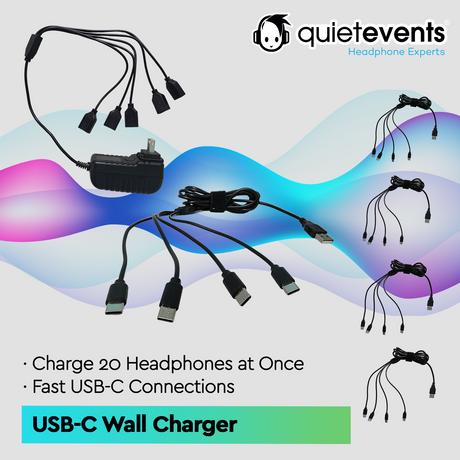

USB-C (Fast Charging) - 20 Headphone Charging AC Wall Set Power Adapter (Ultra1, Ultra2, 600, & 900)
$37.00 USDUnit price /Unavailable -


Ultra2 900 (13CH) - Silent Disco Headphone - (ADA Compliant)
$56.00 USDUnit price /Unavailable


